
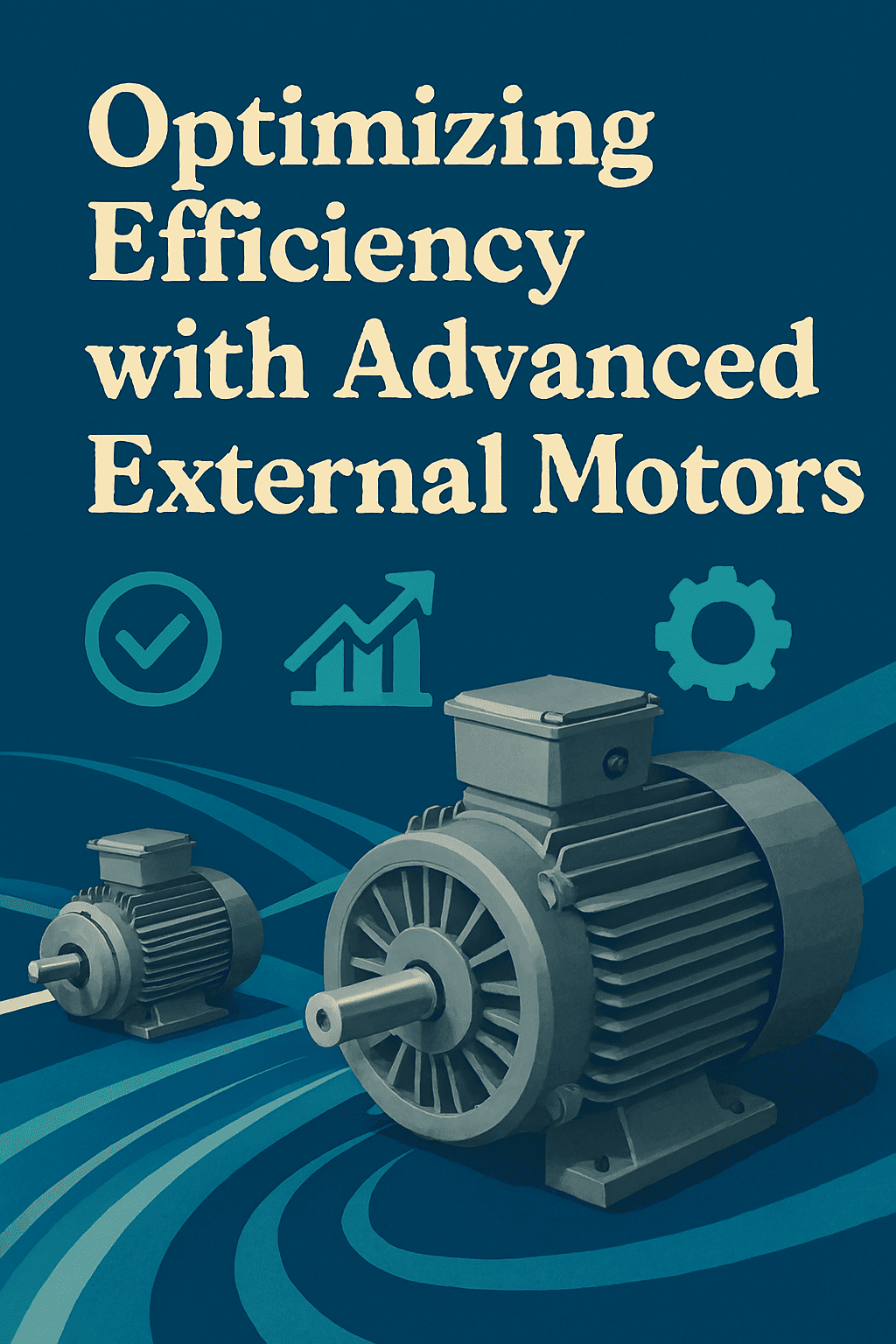
Contemporary manufacturing requires the utmost efficiency of all the system parts. The advanced external motors represent a major technological advancement over traditional motors. These new motors have performed much better, consuming less energy.
Knowing how to make motors energy efficient helps businesses optimize operations, save costs, and boost productivity.
Conventional Motor Limitations
The traditional motor design consumes a lot of energy in heat, friction, and wasteful magnetic fields. A conventional motor operates at a constant speed regardless of the load's requirements. The result of this rigidity was unceasing energy wastage. Old systems are unable to meet the new efficiency requirements.
Modern Advancements
Enhanced outer motors are provided employing the latest materials and electronics. Improved windings, enhanced performance with rare-earth magnets, and precision manufacturing are all performance-enhancing. Its operation is optimized and is computer-controlled at all times. The operational benefits of technology can be measured.
Variable Speed Capability
Contemporary motors only regulate their speed in response to the accuracy of load demand. Variable-frequency drives dynamically control motor operation. Operating at maximum rates, where each task is run, eliminates unused energy. The speed flexibility will be more energy-saving when using energy-efficient motors.
High-Efficiency Design
High-tech materials reduce electrical resistance and minimize magnetic losses. Better cooling is used to ensure the right operating temperatures. Accurate production has close tolerances, which reduce friction. These design improvements compound these efficiency gains.
Smart Control Integration
The motors have embedded sensors to monitor their performance. Control systems operate automatically at their best. Facility management systems can be integrated to optimize together. Smart controls deliver the best performance without human intervention.
Premium Materials
The high-end outer motors come with high-quality copper windings and silicon steel cores. Such materials are conducting with few losses. Strong, light housings are lightweight yet durable. The quality of material has a direct influence on efficiency and useful life.
Reduced Power Consumption
Energy-efficient motors use 20-40 percent less electricity than ordinary motors. The reduced power consumption reduces the utility bills. Plants with a high motor density achieve higher savings.
Reduced Operating Temperatures
Efficient motors produce less waste heat in operations. Lower heat results in lower cooling requirements for facilities. Reduced temperatures increase the life of motor components. The thermal efficiency develops several operational advantages.
Improved Power Factor
High-tech external motors have high power factor ratings. A better power factor reduces reactive power requirements. Poor power factor attracts a premium from utilities. Efficient motors eliminate these extra expenses.
Peak Demand Reduction
Smart motors shift non-essential operations away from peak demand periods. Massive Demand charge cuts make electricity affordable. Energy management is made automated and optimized. Strategic operation reduces utility cost.
Precise Torque Control
In modern motors, specific torque requirements are specified for each application. Torque control helps eliminate power waste caused by excess torque. Accuracy fosters the quality and uniformity of products. Maximal torque performance improves overall efficiency.
Rapid Response Times
Advanced external motors accelerate and decelerate fast. A quick response is appropriate for dynamic production needs. Flexibility in the manufacturing process is possible with responsive motors. Rapid change enhances productivity and efficiency.
Wide Operating Range
Energy-efficient motors are highly efficient over wide speed ranges. Conventional motors can only operate effectively at rated speed. Long efficiency ranges provide application flexibility. Multiple functionality maximizes utility.
Soft Start Capability
Slow, accelerated motion reduces mechanical load and the need for power surges. Soft starts help prolong equipment life and save energy. Electrical systems do not have strains from sudden demands. The smooth control services the attached devices.
Direct Energy Savings
Reducing electricity use generates direct savings. Annual discounts can be thousands of dollars per motor. Various motors increase savings considerably. The most significant motor cost during the lifetime is energy costs.
Maintenance Cost Reduction
Innovative, advanced external motors are more reliable and require fewer service visits. Reduced failure costs save money. Fewer replacements will reduce maintenance. Reliable operation reduces the total cost of ownership.
Extended Equipment Life
Good, energy-efficient motors have a longer lifespan than regular motors. The average lifespan of a typical motor is years longer than that of a traditional motor. Long life delays capital investment. Prolonged investment increases returns.
Productivity Improvements
Dependable, responsive motors ensure constant production rates. Minimized downtime augments productivity without extra capital. Quality results in reduced waste and rework. The productivity improvements strengthen profitability.
Impact on Environment
Reduced carbon emissions imply reduced electricity use. Energy-efficient motors favor sustainability initiatives. Environmentally conscious consumers like the campaign. Green operations build a corporation's reputation.
Resource Conservation
Less energy consumption means less pressure on power production. Communities gain through the reduced amount of resources used. Sustainable practices support the long-term viability of a business. Conservation is also in line with global activities related to environmental conservation.
Regulatory Compliance
Numerous areas require minimum motor efficiency requirements. High-speed external motors are well beyond these requirements. When it is done correctly, there are no penalties or restrictions. Standards put businesses in a favorable position.
Application Assessment
Assess which motors will benefit most from upgrades. The motors with the highest usage give the fastest payback. Premium efficiency is in critical applications. Strategic replacement maximizes the returns on investments.
Sizing Accuracy
Well-sized motors have optimum performance. Excessive motors do not save on energy. Small-sized motors withstand and underperform. Sizing matters because it ensures optimal performance.
Installation Best Practices
Professionals install motors and therefore work efficiently. The alignment, tensioning, and connections are important. Effectiveness is invested in quality installation. Professional installation eliminates operational issues.
Automation Compatibility
The energy-efficient motors can be easily incorporated into automation systems. The operation is coordinated through communication protocols. It becomes possible to optimize systems at the system-wide level. Integration increases productivity.
Data Collection
Smart motors provide operational data for analysis. Patterns of usage allow optimization. Performance monitoring involves detecting emerging problems. Knowledge leads to constant betterment.
Remote Management
Remote monitoring and control are possible with advanced external motors. Off-site management reduces the number of staff. The efficiency is maximized through real-time adjustments. Operating capabilities are enhanced with the remote capabilities.
Payback Period Calculation
The majority of premium exterior motors break even in 2-4 years. Energy conservations take shape within a short time. Extra advantages enhance returns faster. The upgrade investment is worthwhile, as shown in the ROI calculations.
Incentive Programs
Rebates on energy-efficient motors are available from many utilities. Efficiency improvements may be tax-credible. Incentives lead to the minimization of net investment costs. Existing programs enhance financial rationalization.
Long-Term Value
Reliable motors avoid unnecessary costs from failures and also provide energy savings. Continuous value is created when productivity is improved. Increased life expectancy disperses and prolongs expenditure. All value is greater than the start-up investment.
The high-end external motors are efficient due to high-quality design, smart controls, and materials. As a strategic investment, an advanced external motor is a source of long-term efficiency, cost savings, and a competitive edge in today's manufacturing environment.
 810522177@qq.com


 15617522375