
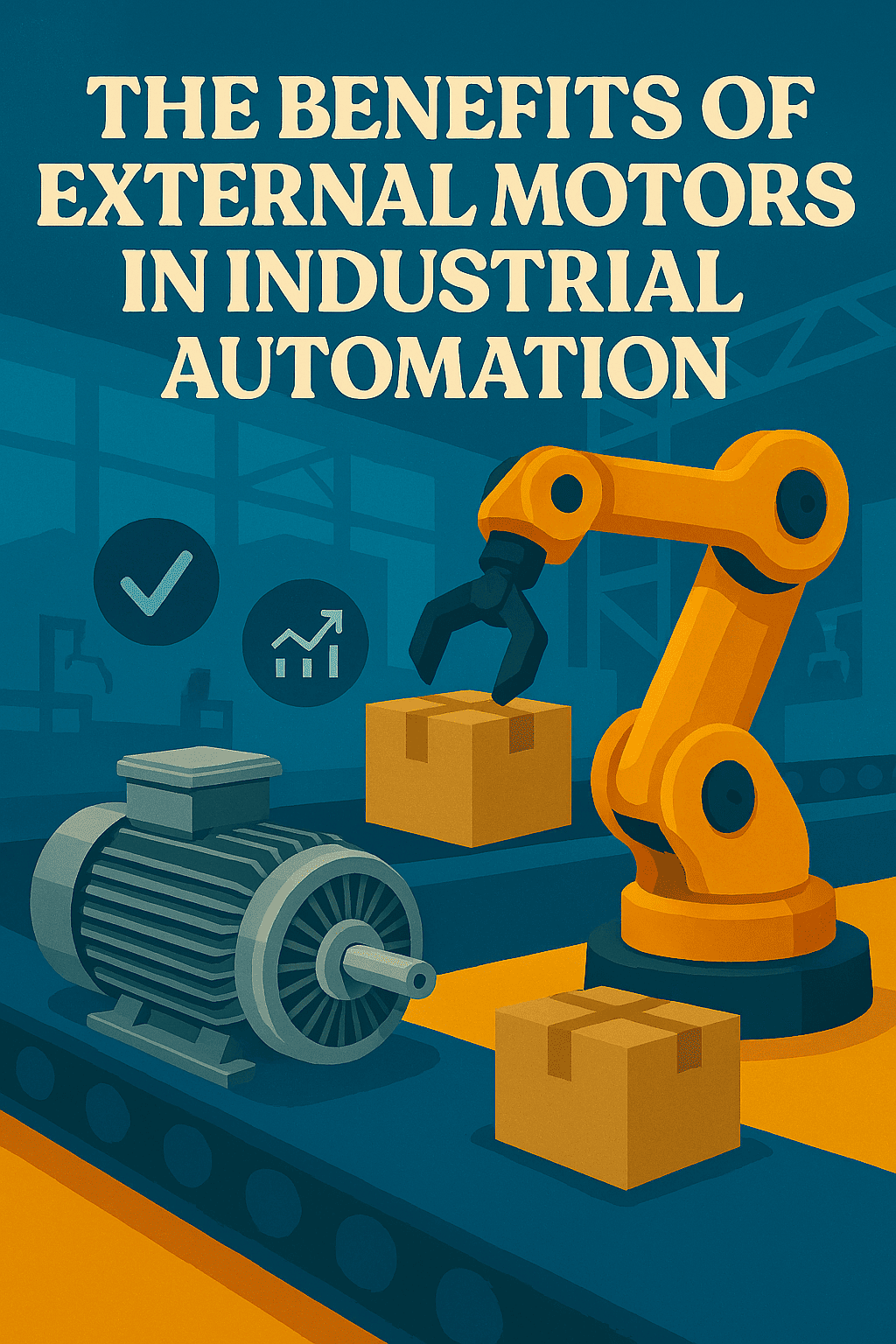
Industrial automation is still sweeping through manufacturing, driven by accurate, efficient equipment. External motors are an important part of an automated system, as they drive conveyors and production equipment.
Learning about the advantages of external motor automation helps manufacturers optimize operations. These motors have unique advantages over built-in versions in terms of durability, maintenance, and performance.
What External Motors Are?
External motors are attached to the object they are connected to without alteration. They are linked to the machine via belts, chains, or direct couplings. This division differs from internal motors constructed into household holdings. The exterior structure is flexible and available.
Common Applications
External motors are used in conveyor systems, pumps, and handling equipment in the manufacturing facilities. Automated assembly lines are dependent on external motors to move with precision. These motors are essential to the packaging operations to ensure consistency. This flexibility applies across millions of industries.
Reduced Heat Exposure
The motors' external orientation keeps them out of heat-generating operations. A good deal of industrial processes generate high thermal energy. Heat causes deterioration of motor parts, reducing life. External mounting prevents temperature extremes from damaging the motor and extends its lifespan.
Contamination security
Dust, chemicals, and moisture directly influence internal motors. The external motor automation enables operation in extreme conditions. Protective enclosures keep external motors from environmental hazards. This insurance detects early breakdown and ensures dependability.
Easier Cooling
External motors benefit from ambient air cooling. The open mounting can achieve heat loss on all sides. Exceptional cooling helps prevent overheating or thermal damage. Temperature control helps extend the motor's life considerably.
Reduced Vibration Impact
Isolating motors and machines helps to keep them vibration-free. Continuous vibration increases the wear of motor parts. Motors are protected by an external mount with strict isolation. Reducing vibration-related stress increases the motor's efficiency and lifespan.
Accurate Speed Regulation
Speed control is highly resolved by external motor automation, which operates advanced drives. Variable-frequency drives also regulate motor speeds to meet the absolute production requirements. This accuracy enhances product quality and consistency. Control is important for optimizing manufacturing processes.
Consistent Torque Delivery
External motors maintain constant torque over the speed range. There is a steady power supply, so standard products are available. The dependability eliminates fluctuations in completed products. Continuous production to tight manufacturing specifications.
Responsive Performance
External motors respond very quickly to the control system's orders. Quick and slow speeds are good for meeting dynamic production demands. This receptiveness allows flexible production processes. Rapid changes are in place to meet the changing production needs.
Optimal Motor Selection
External mounting allows selecting motors that best align with the application's needs. Right-sized motors are at the optimum points of motor efficiency. Big and small integrated motors are inefficient. With proper matching, electrical consumption is significantly reduced.
Energy Recovery Options
Regenerative braking systems can be applied to external motor configurations. Such systems convert kinetic energy into electrical energy. The overall motor efficiency is greatly enhanced by energy recovery. The energy saved helps in lowering the cost of power in facilities.
Better Power Factor
The automation systems of external motors have better power factors. Small power factor values minimize wasted reactive power. Penalties usually apply when utilities have a poor power factor. Efficient motors directly reduce electricity bills.
Easy Inspection
Visual inspection of the equipment is possible without disassembly, thanks to the external motors. During rounds, technicians examine the state of motors in a brief time. Catastrophic failure is avoided through early problem detection. Easy access minimizes unintended periods of downtime.
Quick Replacement
Unsuccessful external motors are replaced promptly, reducing production setbacks. The spare motors can be prepared for installation now. Incorporated motors require extensive equipment dismantling. Quick motor switching safeguards production schedules.
Routine Service
External motors can easily be lubricated, checked, and cleaned. Repair continues without interrupting related machinery. Routine service increases the lifespan of motors by a significant margin. The availability of the motors promotes maintenance compliance.
Modular Equipment Layout
The automation of external motors enables the design of production lines as modules. With equipment, reconfigured equipment is possible without redesigning motor integration. This is flexible, which fits new production demands. The modular systems are responsive to the market needs.
Upgrade Capability
Advancements in technology enable modernizing motors without changing the entire machine. More efficient and newer motors are easy to install. Periodic improvements show the costs over a period. Competitive advantage is sustained through continuous improvement.
Capacity Adjustments
There may be a need for powerful motors to help increase production. Externally mounted motors are upgraded with ease when expansion is needed. Replacing equipment is much more expensive than replacing motors. Scalability ensures the original investments.
Lower Initial Investment
External motors may be cheaper than integrated special motors. Standard motor options apply to various applications that reduce stock levels. The interchangeability gives economic benefits. Ordinary motors make it easier to purchase and manage inventory.
Reduced Downtime Costs
Rapid motor replacement reduces wasted production time. The cost of downtime is usually much higher than the cost of replacing the motor. These expensive interruptions are decreased with the automation of external motors. Profitability is secured by production continuity.
Extended Equipment Life
Motor protection extends equipment lifespan. Fully serviced external motors last longer compared to internal ones. The prolonged life cycles require capital investments. Sturdiness enhances the payback.
Electrical Isolation
External motors may also be brought in to undertake safer electrical work. Technicians service motors that move away from dangerous machinery. Physical segregation reduces the risk of accidents. Greater safety covers employees and extreme liabilities.
Emergency Shutdown
Quick emergency stops are made possible by external motor controls. Having separate motor positioning eases integration of the safety system. Quick closure facility averts accidents. The safety measures safeguard equipment and people.
Climate Control
The external motors may be enclosed in a climate-controlled destination. High temperatures affect motor performance and lifespan. Available controlled environments ensure a good operating environment. Stable performance is achieved through environmental protection.
Hazardous Area Compliance
In hazardous conditions, explosion-proof or sealed motors are required. External mounting allows the correct selection of the motor for the conditions. Safety regulations are easily complied with. The proper motors stop dangerous accidents.
Sensor Compatibility
Monitoring sensors can easily be incorporated into external motor automation. Health conditions of the motors are monitored by temperature, vibration, and current sensors. Predictive maintenance is possible through real-time data. This can be achieved through smart monitoring that prevents unforeseen failures.
Network Connectivity
The new external motors are still smoothly attached to the facility networks. It is integrated with manufacturing execution systems, which optimize the operations. Information exchange also allows gains in efficiency at an enterprise level. Integrated systems are a source of practical operational knowledge.
Remote Monitoring
The external motor status is remotely monitored. Maintenance teams get notifications of emerging problems. Remote capabilities lower the staffing requirements. Attempts to have early warning systems eliminate costly breakdowns.
External motors are of great advantage to automation in the industries by offering greater durability, precision, and efficiency. External motor automation provides key benefits for modern manufacturing plants seeking operational excellence and competitiveness.
 810522177@qq.com



 15617522375